




Sanitpharma Magazine
Your space for daily well-being: useful content, interesting facts, and advice on health and prevention
 Featured
09/07/2025
Perfect feet for summer: how to say goodbye to calluses and cracked heels
Sanitpharma
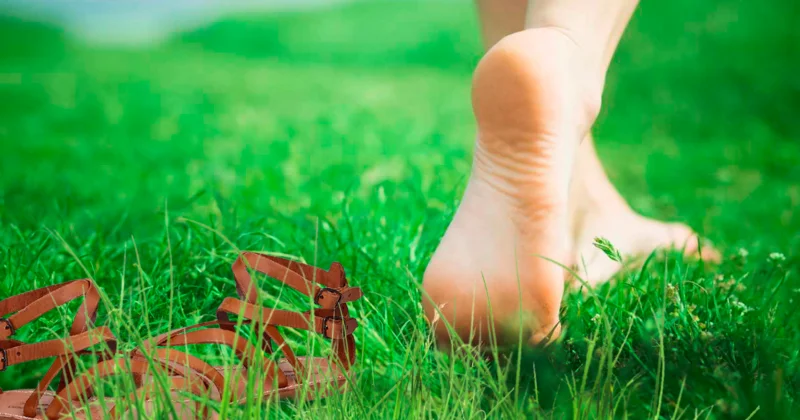
With the holidays just around the corner, it’s time to make room in your closet for tank tops, shorts, and sandals. But are your feet truly ready to enjoy the summer heat—whether displayed in open-toed footwear or left completely bare on beaches and lawns?
The long winter months, which force us into boots and snow boots, often take a toll on the health of our feet, leaving behind clear signs of distress such as dry, cracked heels, calluses, and corns. At this time of year, many of us look for helpful tips on how to get rid of these annoying—and sometimes painful—imperfections, ensuring our feet are once again "flip-flop ready." Before we share some suggestions for an effective at-home pedicure, let’s explore what causes the skin to harden and toughen, and why this happens.
In our body, the skin is the organ in direct contact with the external environment; it shields us from the harmful effects of chemical and physical agents, as well as from dehydration. Of the three layers that make up the skin—the hypodermis, the dermis, and the epidermis—the epidermis is the outermost layer, serving as a true protective barrier. The epidermis itself is composed primarily of "keratinocytes"—a type of cell specialized in producing large quantities of a structural protein known as "keratin," from which they derive their name. Within the epidermis, keratinocytes are organized into the basal, spinous, granular, and cornified layers. The basal layer, which is the deepest, contains less mature or undifferentiated keratinocytes that divide continuously to ensure the frequent renewal of the epidermis. As these keratinocytes mature, keratin synthesis increases, and the cells move toward the skin's surface, passing through the spinous and granular layers before reaching the cornified layer. In this final layer, the amount of keratin produced becomes so high that the keratinocytes forgo all other cellular functions, forming a network of cornified, scale-like cells. These are interspersed with a matrix of lipid substances—essential for retaining moisture—which serves to protect the underlying epidermal layers, where keratinocytes are still actively proliferating and differentiating. It is important to note that maintaining the proper balance (also known as "homeostasis") among the various compartments of the epidermis is essential for ensuring the well-being and proper functioning of the skin.
What, then, are the external factors that can compromise skin homeostasis?
The most common external stressors include sun exposure, harsh cleansers (with an overly basic pH), infections, low environmental humidity, and mechanical trauma. Since our focus is on understanding and improving foot health, it is worth examining abnormal mechanical stimulation—such as excessive pressure or prolonged friction—which can compromise the epidermal barrier and lead to both acute and chronic issues. A classic example of acute mechanical damage is the highly uncomfortable blister, often the unfortunate result of wearing attractive but ill-fitting shoes! Conversely, the winter boots mentioned earlier can cause chronic mechanical damage; in response to a disruption in the interaction between keratinocytes and an alteration in the skin's surface architecture, the keratinocytes become hyperactive, causing the epidermis to thicken. This mechanically induced thickening is known as "mechanical hyperkeratosis," with corns and calluses being the most common examples. The primary difference between the two is that calluses generally cover a broader area, whereas corns are more localized, feature a distinct central conical core, and typically form over joints. Even when the breakdown of the epidermal barrier does not result in the development of actual corns or calluses, the skin can still become severely dehydrated—a condition most visibly and commonly manifested as dry, cracked heels.
Useful tips to follow
Based simply on the few observations we have just discussed, it is possible to derive some useful tips for restoring feet that may be a bit worn out from being confined in heavy—and not always very comfortable—shoes throughout the winter. The key concepts are hydration and exfoliation. Applying moisturizing products helps restore the skin’s barrier: this occurs by forming a hydrophobic barrier that retains water (in the case of "occlusive" substances), by facilitating the movement of water molecules from the dermis to the epidermis (in the case of "humectant" substances), and by filling in small cracks and fissures, thereby improving the skin's texture (in the case of "emollient" substances). Exfoliation, on the other hand, allows for the removal of excess cornified keratinocytes, thereby counteracting the thickening typical of hyperkeratosis. Therefore, the practical recommendations are:
- Use a soap with a slightly acidic pH, similar to the skin’s natural pH level
- Use products that contain exfoliating agents (keratolytic agents), such as urea and salicylic acid
- Frequently apply a moisturizer—ideally one that is emollient (rich in vegetable oils) or humectant
Other articles from the Magazine
15/10/2026
Skin barrier health: from chronic conditions to new dermocosmetic strategies
Our skin is much more than a simple covering: it is a complex ecosystem, a sophisticated defensive barrier, and the primary reflection of our physical and mental well-being.
Learn more
15/10/2026
“Keeping an eye on” well-being: taking care of your eyesight every day
Our vision is with us at every moment of the day. Reading, working, driving, and using smartphones or computers are daily activities that place constant demands on our eyes.
Learn more
01/07/2025
The bilberry as you’ve never known it: from the Middle Ages to modern science
The taxonomic name of the bilberry, Vaccinium myrtillus, derives from the Latin bacca—a term denoting any roundish fruit—and myrtillus, which literally means "little myrtle," likely in reference to the resemblance between the leaves and fruits of the two plants.
Learn more