



Sanitpharma Magazine
Your space for daily well-being: useful content, interesting facts, and advice on health and prevention
16/01/2025
Hair in crisis? The hidden causes of hair loss and tips to save your hair
Many people find themselves dealing with hair loss.
Understanding your hair—its structure, its strengths, and its weaknesses—helps you support and protect it.
Hair life cycle
Hair consists of skin appendages that follow a regular cycle composed of three phases:
- Anagen, the growth phase, which lasts from 2 to 7 years
- Catagen, the regression phase, which lasts from 7 to 21 days
- Telogen, the resting phase, which lasts about 3 months and is followed by the shedding of the hair and the subsequent formation of a new hair by the follicle
Typically, the distribution is 80–90% of hairs in the anagen phase, 1% in the catagen phase, and 10–20% in the telogen phase.
The cyclical growth of hair follows a random, mosaic-like pattern, meaning that, on average, the number of hairs lost is equal to the number of new hairs being formed; this ensures consistent coverage of the scalp. Each hair follicle possesses its own individual control mechanisms for transitioning between the various stages of the growth cycle. These mechanisms can be triggered by endogenous factors—such as hormones and cytokines—or by external environmental factors, such as nutritional deficiencies in vitamins or minerals.
Possible causes of hair loss
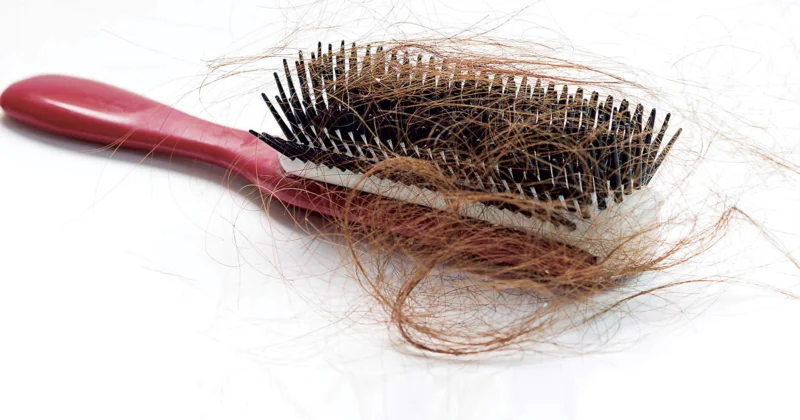
Hair shedding is a physiological process, involving the loss of 50 to 80 hairs per day; this detachment is often facilitated by mechanical stress, such as brushing or washing.
Conversely, hair loss is considered abnormal if it exceeds 100 hairs per day, persists for several weeks, and results in noticeable thinning that makes the scalp visible.
Beyond the natural seasonal shedding that occurs during the winter and spring months, there are various factors and reasons that can trigger hair loss—ranging from stress, diet, weight fluctuations, and hormonal shifts to poor lifestyle habits, sun exposure, and the use of certain products.
In many cases, increased hair shedding is an isolated event with no permanent consequences; however, at other times, it may serve as an indicator of an underlying medical condition, which may not necessarily be dermatological in nature.
Nutritional deficiencies are among the many causes of increased hair loss. Iron and zinc deficiencies are particularly well-known, although the precise mechanism by which they contribute to hair loss remains a subject of ongoing research.
Oxidative stress, caused by an excessive production of free radicals, is also associated with hair loss.
The remedies
The health of our hair begins with a balanced, varied diet and an adequate intake of nutrients.
Consuming fruits and vegetables is highly recommended, as they are rich in biotin, vitamin C, copper, zinc, and other nutrients that support hair health. An appropriate intake of substances with antioxidant activity—a category that includes vitamins (such as vitamins C, A, and E) as well as polyphenols—is essential for maintaining the balance of our body’s endogenous antioxidant system.
B-group vitamins, found primarily in eggs, white meat, fish, legumes, and unrefined grains, work in synergy to maintain the delicate metabolic balance of the hair follicle.
The consumption of shellfish and mollusks, apples, grapes, and nuts is also recommended.
While some hair loss is normal, it can become a concern if it is excessive and persists over a long period.
This issue can be managed by taking proper care of your hair—knowing what steps to take and, most importantly, which products to use. It is crucial to be cautious with cleansing products that contain SLES (Sodium Laureth Sulfate). As a surfactant designed to "dissolve dirt," SLES can damage hair follicles, leading to redness and hair loss; it also compromises the hydrolipidic film, causing dryness and dehydration of the scalp, and shifts the skin’s pH toward an alkaline state, thereby stripping the scalp of its natural defenses.
Priority should be given to products that target the scalp—the area where the hair follicles, from which hair originates, are located. Furthermore, the use of dietary supplements is recommended; these not only enhance the effect of topical treatments but also compensate for micronutrient deficiencies that contribute to hair loss.
This dual, synergistic action both promotes natural hair growth and strengthens the hair, resulting in a fuller, stronger head of hair.
Other articles from the Magazine
15/10/2026
Skin barrier health: from chronic conditions to new dermocosmetic strategies
Our skin is much more than a simple covering: it is a complex ecosystem, a sophisticated defensive barrier, and the primary reflection of our physical and mental well-being.
Learn more
15/10/2026
“Keeping an eye on” well-being: taking care of your eyesight every day
Our vision is with us at every moment of the day. Reading, working, driving, and using smartphones or computers are daily activities that place constant demands on our eyes.
Learn more Featured
09/07/2025
Perfect feet for summer: how to say goodbye to calluses and cracked heels
Sanitpharma
With the holidays just around the corner, it’s time to make room in your closet for tank tops, shorts, and sandals. But are your feet truly ready to enjoy the summer heat—whether displayed in open-toed footwear or left completely bare on beaches and lawns?
Learn more