




Sanitpharma Magazine
Your space for daily well-being: useful content, interesting facts, and advice on health and prevention
 Featured
24/07/2024
Acne: causes, symptoms and effective remedies for healthy skin
Acne vulgaris—commonly referred to simply as "acne"—is a skin condition that primarily affects the face, neck, and back. In reality, it is a complex disorder; its pathogenesis, as well as its overlap with hormonal and metabolic disturbances, remains a subject of ongoing research and in-depth study.
According to an epidemiological study conducted in 2010, acne affects nearly 10% of the global population and is particularly prevalent among individuals between the ages of 12 and 25.
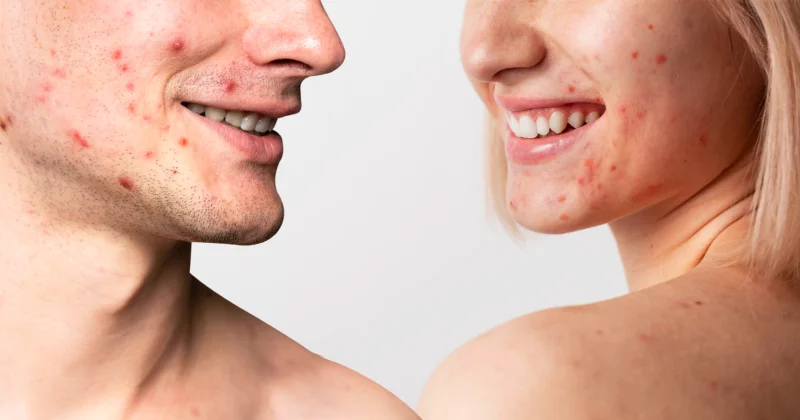
The clinical presentation varies—depending on the degree of infection and inflammation—ranging from the appearance of comedones (blackheads or whiteheads) and pimples to the formation of cysts, papules, and pustules. These can be highly painful, difficult to treat, and prone to problematic healing, often resulting in "atrophic scars"—characterized by a sunken appearance caused by a loss of tissue in the deeper layers of the skin.
Skin in a nutshell
The skin is composed of three layers: the hypodermis, the dermis, and the epidermis. The epidermis, the outermost layer, is made up of "keratinocytes"—a type of cell specialized in producing large quantities of the structural protein "keratin." Within the epidermis, keratinocytes are arranged—from the deepest level to the most superficial—into layers that become increasingly rich in keratin. By the time they reach the outermost layer, known as the stratum corneum, the cells are no longer viable; they appear completely keratinized, horny, and prone to shedding (desquamation). In addition to these functionally organized layers, the skin also contains various cutaneous appendages, including the pilosebaceous unit (or hair follicle). The pilosebaceous unit consists of a hair, a sebaceous gland, and an arrector pili muscle. It takes the form of an invagination—a finger-like fold—of the epidermis extending into the underlying dermis. At the deepest end of the follicle, there is a dermal protrusion surrounded by two concentric structures: the "hair matrix" (the inner layer) and the "hair bulb." The hair matrix is composed of keratinocytes highly specialized in synthesizing a specific, extremely hard and durable variant of keratin, which forms the hair. As the material produced by the matrix accumulates, the hair fiber elongates and moves toward the skin's surface, traveling along the follicle's epidermal canal. The most superficial section of this follicular canal is called the "infundibulum"; it encompasses the area extending from the point where the sebaceous gland's excretory duct enters the canal, up to the opening through which the hair emerges. Sebocytes, which make up the sebaceous gland, release sebum—an oily substance composed of various types of lipids. This substance travels through the excretory duct into the infundibulum, where it combines with keratinous debris—resulting from the desquamation of the keratinocytes that line the hair follicle—and is then carried to the skin's surface by the emerging hair. Acne is considered a disorder of the pilosebaceous unit, as hyperkeratinization of the infundibulum, the accumulation of sebum, and a state of prolonged inflammation are all factors that play a decisive role in the development of this condition.
Causes and remedies
The onset of acne is attributed to a hormonal imbalance resulting in the excessive production of androgenic hormones—such as testosterone and dihydrotestosterone—which trigger an increase in sebum secretion and the subsequent occlusion of the hair follicle. The resulting stagnation of sebum promotes the growth of bacteria, such as Cutibacterium acnes, which consume the triglycerides contained within the sebum, releasing increasing amounts of fatty acids as metabolic waste products. These fatty acids, in turn, stimulate both the aberrant proliferation and the maturation of keratinocytes in the infundibulum; these cells desquamate at an accelerated rate, clogging the follicle with keratinous material and further exacerbating the accumulation of sebum. This vicious cycle is compounded by an inflammatory component—partly driven by the development of an infection—which actively contributes to hyperkeratosis of the infundibulum.
Over time, the number of medications designed to combat acne has grown significantly, in tandem with an evolving understanding of the various biological processes that may be disrupted and how they interact. Current treatments can be categorized as either topical—typically ointments or gels applied directly to the affected skin—or systemic—formulations that are generally ingested and reach various parts of the body. The first category includes, for example, BPO (benzoyl peroxide), which inhibits bacterial growth and acts as a comedolytic agent; Vitamin C, Vitamin E, and glycolic acid, which reduce inflammation and help prevent atrophic scarring; and Vitamin A (or retinol), which counters hyperkeratosis by regulating the proliferation of keratinocytes. The second category includes isotretinoin, which reduces sebum production by decreasing the efficiency of testosterone receptors and halting the maturation of sebocytes; as well as thiazolidinediones and metformin—medications historically used to treat type 2 diabetes—which act upstream of androgenic hormones by indirectly reducing plasma concentrations of IGF-1 and insulin, both of which are hormones involved in regulating bodily growth. It has, in fact, been shown that high circulating levels of IGF-1 and insulin enhance both the synthesis and activity of testosterone and related hormones, promote the production of fatty acids, and induce the proliferation—and subsequent maturation—of keratinocytes and sebocytes.
Regarding skincare, dermatologists warn against the common mistake of trying to combat excessive sebum production by frequently using harsh soaps that dry out the skin. In fact, excessive dehydration can have the opposite effect: it exacerbates existing inflammation, prompting the skin to produce even more sebum in an attempt to restore the natural hydrolipidic film that protects it from external stressors. Instead, it is recommended to use very gentle cleansers—products with calming, anti-inflammatory, healing, and emollient properties—applying them to the skin without rubbing too vigorously.
Other articles from the Magazine
15/10/2026
Skin barrier health: from chronic conditions to new dermocosmetic strategies
Our skin is much more than a simple covering: it is a complex ecosystem, a sophisticated defensive barrier, and the primary reflection of our physical and mental well-being.
Learn more
15/10/2026
“Keeping an eye on” well-being: taking care of your eyesight every day
Our vision is with us at every moment of the day. Reading, working, driving, and using smartphones or computers are daily activities that place constant demands on our eyes.
Learn more Featured
09/07/2025
Perfect feet for summer: how to say goodbye to calluses and cracked heels
Sanitpharma
With the holidays just around the corner, it’s time to make room in your closet for tank tops, shorts, and sandals. But are your feet truly ready to enjoy the summer heat—whether displayed in open-toed footwear or left completely bare on beaches and lawns?
Learn more